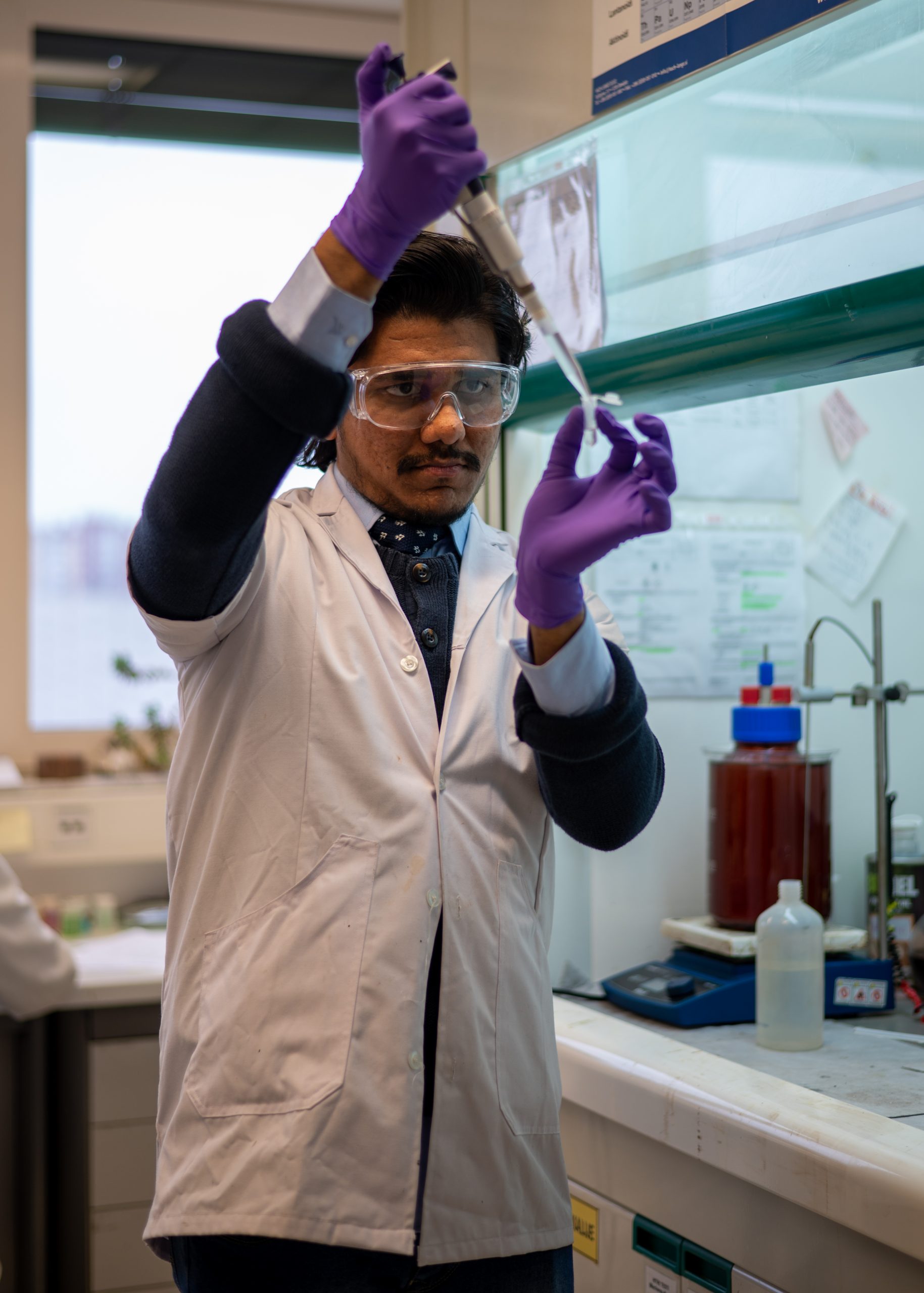
The development of any successful nano biosensor depends on selecting the three important components of a nano biosensor which are bioreceptor, transducer and signal output. Allwin Mabes Raj, an Early-stage researcher (ESR- 11), developed various possibilities for developing nano biosensors for MeHg detection with various combinations of bioreceptor, transducer and signal output with his supervisor, Dr Aleksandra Lobnik and Dr Aleš Lapanje, which he described as an enjoying exercise.

Before the inception of his work, he prepared a detailed review of literature using which MeHg is detected using various sensor approaches. According to this, he categorized all the previous works into six different approaches they are
- Bacterial biosensors or Whole cells biosensors (WCB),
- Immunostrip
- Small molecule probes (SMP),
- Metal-Organic Framework (MOF)
- Nanoparticles (NPs)
- Nanoarchitectonics
A schematic illustration of six different approaches for detecting MeHg is depicted in the Figure below.